


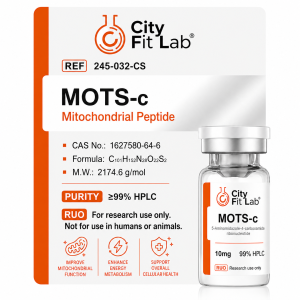
MOTS-c 10mg
MOTS-c is a peptide composed of 16 amino acids, encoded by mitochondrial DNA. It activates AMPK to regulate metabolic pathways like fatty acid oxidation and gluconeogenesis, helping maintain blood sugar stability, prevent obesity and insulin resistance. MOTS-c can also activate stress signaling pathways to enhance cells’ stress resistance. Additionally, it has anti-inflammatory and antioxidant properties, inhibits inflammatory mediators, reduces oxidative stress, offering a prevention strategy for cardiovascular diseases and diabetes. Moreover, MOTS-c can interact with transcription factors and regulatory elements in nuclear DNA to directly regulate nuclear DNA expression.
- Estimated Delivery : Up to 4 business days
- Free Shipping : On all orders over $2000 MXN
▎MOTS-c Structure

Source: PubChem |
Sequence: MRWQEMGYIFYPRKLR
Molecular Formula: C101H152N28O22S2 Molecular Weight: 2174.6g/mol CAS Number: 1627580-64-6 PubChem CID: 146675088 Synonyms: UNII-A5CV6JFB78 |
▎MOTS-c Research
What is the research background of MOTS-c?
The mitochondrion is an important site for energy metabolism within cells. For a long time, scientists have conducted extensive and in-depth research on the structure and function of mitochondria. In this process, it has been gradually recognized that mitochondria not only play a key role in energy production but may also participate in other physiological processes of cells through some unknown mechanisms.
With the continuous progress of research technologies, especially the development of genomics and proteomics technologies, it has become possible to discover new mitochondria-related molecules. MOTS-c (mitochondrial open reading frame of the 12S rRNA-c) is a mitochondria-derived peptide encoded by the 12S rRNA region of the mitochondrial genome[1].
Through in-depth analysis of the mitochondrial genome, scientists have discovered some small open reading frames (sORFs), which may encode some peptides with specific functions. After further research and verification, MOTS-c was identified. Studies have found that MOTS-c is expressed in a variety of tissues in humans and animals. It mainly acts on skeletal muscles through the bloodstream, increasing the uptake and utilization of glucose, thereby improving insulin resistance and regulating metabolic balance [2].
With the deepening of research, it has been found that changes in the expression of MOTS-c are closely related to the occurrence and development of aging and age-related diseases. For example, the level of MOTS-c in plasma decreases with age (Zheng Y, 2013). At the same time, MOTS-c has been proven to be beneficial for age-related diseases, including diabetes, cardiovascular diseases, osteoporosis, postmenopausal obesity, and Alzheimer’s disease [3].
What is the mechanism of action of MOTS-c?
Regulating gene expression:
MOTS-c can exert its physiological functions by regulating gene expression. For example, it can regulate the expression of genes such as GLUT4, STAT3, and IL-10. MOTS-c mainly exerts its effect by activating the AICAR-AMPK signaling pathway and disrupting the folate-methionine cycle in cells [4].
Improving insulin resistance:
MOTS-c can reduce insulin resistance and prevent type 2 diabetes. Its mechanism of action may be related to the inhibition of myostatin. Studies have found that the plasma MOTS-c level is negatively correlated with the myostatin level in the human body. MOTS-c can improve insulin sensitivity by inhibiting the activity of the upstream transcription factor FOXO1 and reducing the myostatin level[5].
Promoting muscle differentiation:
In muscle cells, MOTS-c interacts with STAT3 through a putative SH2 binding motif in the YIFY region, reducing the transcriptional activity of STAT3, thereby enhancing myotube formation. The wild-type MOTS-c peptide can increase the myotube formation of human (LHCN-M2) and mouse (C2C12) muscle progenitor cells and protect muscle cells from the reduction of nuclear myogenin staining induced by interleukin-6 (IL-6) [6].
Regulating mitochondrial function:
MOTS-c can regulate mitochondrial metabolism. Studies have shown that treating mammalian cells with MOTS-c can increase the protein levels of mitochondrial biogenesis markers TFAM, COX4, and NRF1, but flow cytometry analysis shows that the number of mitochondria decreases sharply after MOTS-c treatment. Further research has found that MOTS-c may synchronously activate mitochondrial fusion and increase the protein levels of two GTPases, OPA1 and MFN2, which are crucial for the fusion of mammalian mitochondria. Inhibiting these two GTPases or knocking down MFN2 through siRNA will eliminate the ability of MOTS-c to promote GLUT4 translocation and glucose uptake[7].

MOTS-c is a potential therapeutic target for multiple aging-related diseases, including neurodegeneration, osteoporosis, cardiovascular disease, atherosclerosis, sarcopenia, type 2 diabetes mellitus, and obesity.
Source:PubMed[8]
What are the applications of MOTS-c?
Improving age-related diseases
Relationship with aging:
MOTS-c is a mitochondria-derived peptide, and changes in its expression are closely related to the occurrence and development of aging and age-related diseases. As people age, the level of MOTS-c decreases. Studies have found that exercise has a significant impact on the expression of MOTS-c, and MOTS-c may mediate the anti-aging effect of exercise[3].
Diabetes:
MOTS-c can improve the body’s glucose and lipid metabolism, promote mitochondrial function in cells, and reduce the systemic chronic inflammatory response. For diabetic patients, the level of MOTS-c in plasma decreases. MOTS-c can regulate metabolic homeostasis by accelerating glucose uptake and improving insulin sensitivity, and it has a positive effect on preventing type 2 diabetes[8].
Cardiovascular diseases:
Cardiac structural remodeling and dysfunction are common complications of diabetes, often leading to serious cardiovascular events. MOTS-c can improve vascular endothelial function and is a new therapeutic target for cardiovascular complications of diabetes. Studies have shown that MOTS-c can repair myocardial mitochondrial damage in diabetic rats and protect cardiac systolic and diastolic functions[9].
Osteoporosis: MOTS-c can promote the proliferation, differentiation, and mineralization of osteoblasts, inhibit osteoclast genesis, and regulate bone metabolism and bone remodeling. Exercise can effectively upregulate the expression of MOTS-c, but the specific mechanism by which exercise regulates MOTS-c in bones is still unclear [10].
Other diseases
Pulmonary fibrosis:
Pulmonary fibrosis is a serious lung disease with a poor prognosis, and its etiology and pathogenesis are still unclear. The mitochondrial open reading frame of 12S rRNA-c (MOTS-c) is a peptide encoded by the mitochondrial genome, which has a positive effect on glucose and lipid metabolism, cellular and mitochondrial homeostasis, and the reduction of the systemic inflammatory response, and may be a potential exercise mimetic. This review aims to comprehensively analyze the existing literature on the potential role of MOTS-c in improving the development of pulmonary fibrosis and identify specific therapeutic targets for future treatment strategies[11].
Duchenne muscular dystrophy:
MOTS-c is a mitochondria-derived bioactive peptide with inherent muscle-targeting properties, which can increase the glycolytic flux and energy production capacity of dystrophic muscles in vitro and in vivo, thereby enhancing the uptake and activity of phosphonodiamidite morpholino oligomers (PMO) in mdx mice. Long-term repeated administration of MOTS-c and PMO can induce the expression of therapeutic levels of dystrophin in peripheral muscles, improve the muscle function and pathology of mdx mice, and has no obvious toxicity [12].
Obesity and muscle atrophy:
Obesity and type 2 diabetes are metabolic diseases often associated with sarcopenia and muscle dysfunction. MOTS-c, as a systemic hormone, participates in metabolic homeostasis. Studies have found that the plasma MOTS-c level is negatively correlated with the myostatin level in the human body. MOTS-c can prevent palmitic acid-induced atrophy of differentiated C2C12 myotubes and reduce the myostatin level in the plasma of diet-induced obese mice. By inhibiting myostatin, MOTS-c may be a potential treatment for skeletal muscle atrophy caused by insulin resistance and other muscle atrophy phenotypes including sarcopenia [5].
Risk of metabolic diseases in breast cancer survivors:
Women who have received breast cancer treatment are at an increased risk of cardiovascular diseases, diabetes, and obesity, and exercise can alleviate these side effects. MOTS-c has exercise-mimicking activity and has beneficial effects on metabolism and exercise capacity. Studies have found that a 16-week aerobic and resistance exercise intervention can increase the MOTS-c level in non-Hispanic breast cancer survivors, but has no significant effect on Hispanic breast cancer survivors. The increase in the MOTS-c level induced by exercise in non-Hispanic breast cancer survivors may be related to the improvement of insulin sensitivity, thereby reducing the risk of comorbidities [13].
In conclusion, as a 16-amino acid polypeptide encoded by the mitochondrial genome, MOTS-c plays a core role in the body’s metabolic regulation, stress defense, and disease prevention and treatment. It can significantly improve the homeostasis of glucose and lipid metabolism, enhance insulin sensitivity, and inhibit the expression of myostatin, effectively alleviating type 2 diabetes, obesity, and related muscle atrophy. At the same time, by regulating mitochondrial biogenesis and fusion, MOTS-c enhances the cell’s antioxidant capacity and inhibits the inflammatory response, showing therapeutic potential for chronic diseases such as cardiovascular diseases, osteoporosis, and pulmonary fibrosis. Particularly importantly, as a key mediator of mitochondria-nucleus communication, MOTS-c can simulate the effects of exercise and delay the aging process. Its level is negatively correlated with age-related diseases, and exogenous supplementation can reverse metabolic disorders and inhibit viral replication. It is known as the “mitochondrial hormone”.
1 review for MOTS-c 10mg
5.00 out of 5 stars
Add a review
Related products
-
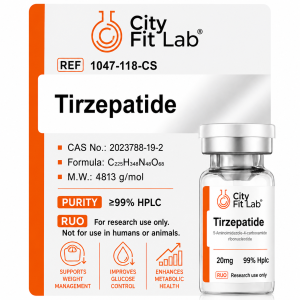
Tirzepatide 20mg
Original price was: $2,600.$2,300Current price is: $2,300. -
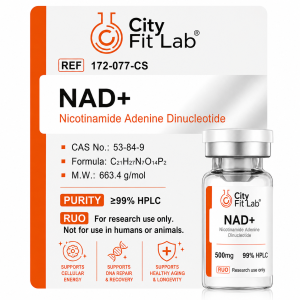
NAD+ 500mg
Original price was: $1,700.$1,350Current price is: $1,350. -
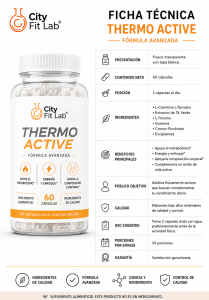
CityFitLab® Thermo-Active
Available on: July 22, 2026 at 7:33 pmOriginal price was: $850.$550Current price is: $550. -
Tesamorelin 20mg
Original price was: $3,950.$3,200Current price is: $3,200. -
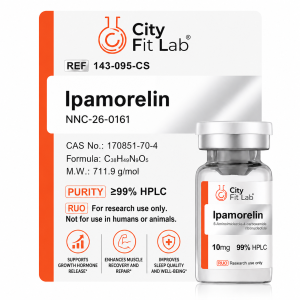
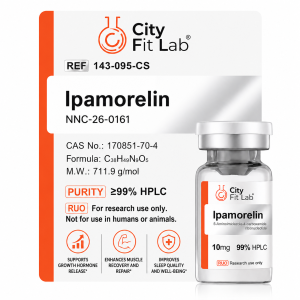
Ipamorelin 10mg
$1,100 -
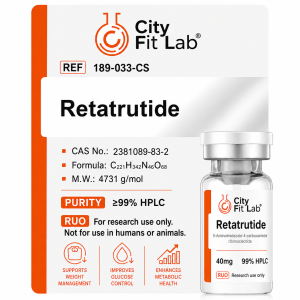
Retatrutide 40mg
Original price was: $3,600.$3,000Current price is: $3,000.



María Fernanda López –
Excelente atencion gracias
Soy de Monterrey, Decidí probar este protocolo como parte de mi plan de bienestar y estoy muy satisfecha. La calidad del producto y la atención recibida fueron increíbles. Me he sentido con más energía y he podido mantener una mejor rutina de alimentación y ejercicio.